Global Opinion Shifts: Pew Study Suggests More People Now View China More Favorably Than the United States
A new international survey by the Pew Research Center suggests a notable shift in global public opinion: in several countries, more people now hold favorable views of China than of the United States. The findings also indicate that Chinese President Xi Jinping receives higher confidence ratings than U.S. President Donald Trump among respondents in many of the surveyed nations.
The report highlights changing perceptions of global leadership and influence at a time when geopolitical competition between the world's two largest economies continues to shape international affairs.
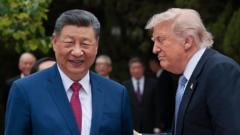
Key Findings from the Survey
According to the Pew Research Center, public opinion was gathered from thousands of respondents across multiple countries. Some of the survey's key findings include:
- China received more favorable ratings than the United States in a number of surveyed countries.
- Confidence in Chinese President Xi Jinping exceeded confidence in U.S. President Donald Trump in many regions.
- Opinions varied significantly depending on geography, political systems, economic relationships, and historical ties.
The survey reflects public attitudes rather than official government positions or foreign policy decisions.
Why Are Global Views Changing?
Experts point to several factors that may be influencing international perceptions:
Economic Influence
China has expanded its global economic footprint through trade, infrastructure investment, and development partnerships. Many countries have strengthened commercial ties with China, making it an important economic partner.
Diplomatic Engagement
China has increased its diplomatic presence across Asia, Africa, Latin America, and parts of Europe, often emphasizing investment, infrastructure, and long-term cooperation.
Perceptions of U.S. Leadership
Public opinion of the United States can fluctuate depending on international events, domestic politics, and foreign policy decisions. Leadership style, international alliances, and policy priorities often shape how other countries view the U.S.
Regional Differences
The survey found that opinions are far from uniform. While some countries expressed growing confidence in China, others continued to view the United States more positively. Regional history, security concerns, economic interests, and cultural connections all influence public attitudes.
What Does This Mean?
The findings suggest that global influence is becoming increasingly complex. Rather than one country dominating international public opinion, perceptions now vary widely depending on local experiences and national priorities.
However, it is important to note that favorable public opinion does not necessarily translate into political alignment or strategic partnerships. Governments often make foreign policy decisions based on security, economic, and diplomatic interests that extend beyond public sentiment.
Understanding Public Opinion Surveys
Surveys such as those conducted by the Pew Research Center provide valuable insights into how people perceive global issues and international leaders. They are designed to capture trends in public opinion at a specific point in time.
Like all surveys, results can be influenced by factors such as sample size, survey timing, methodology, question wording, and current events. As a result, they should be interpreted as indicators of public sentiment rather than definitive measures of international influence.
Looking Ahead
As competition between China and the United States continues to shape global politics, public opinion is likely to remain dynamic. Economic performance, diplomatic engagement, technological leadership, and responses to international challenges will all play important roles in shaping how people around the world view both countries.
The Pew survey offers a snapshot of changing global perceptions, underscoring the evolving nature of international influence in an increasingly interconnected world.
Final Thoughts
The latest Pew Research Center study suggests that global public opinion may be shifting in favor of China in several parts of the world, with President Xi Jinping receiving higher confidence ratings than President Donald Trump among respondents in many surveyed countries. While these findings do not reflect government policy or predict future geopolitical outcomes, they provide an important perspective on how international audiences currently view the world's two leading powers.
As global political and economic landscapes continue to evolve, public opinion will remain one of many factors influencing international relationships and global leadership.